
What should a photography portfolio look like?
A portrait gallery can feel intimate before you open the first image. A travel series can make you want to follow the road around the next corner. These examples show how covers, grouping, and sequence create that invitation—and how to make similar choices for your own photographs.
Quick answer
Use these ISO100 galleries to see how a cover, image sequence, and a few words of context bring photographs together. Look at how the portrait, travel, and nature examples establish a subject, then apply the same decisions to your own series.
In this guide
1. A single project
One sustained body of work can carry the whole portfolio. This structure suits a long-term personal study, fine-art series, documentary project, thesis, book proposal, or exhibition work.
Open with a photograph that draws someone into the project, then let the subject develop over perhaps 15 to 30 images if the work supports it. A short statement can supply the premise; the photographs should carry the experience.
Choose an ending that changes or completes the first impression. Unrelated favorites can wait for another gallery: this structure works because it lets someone stay with one idea.
2. One nature subject
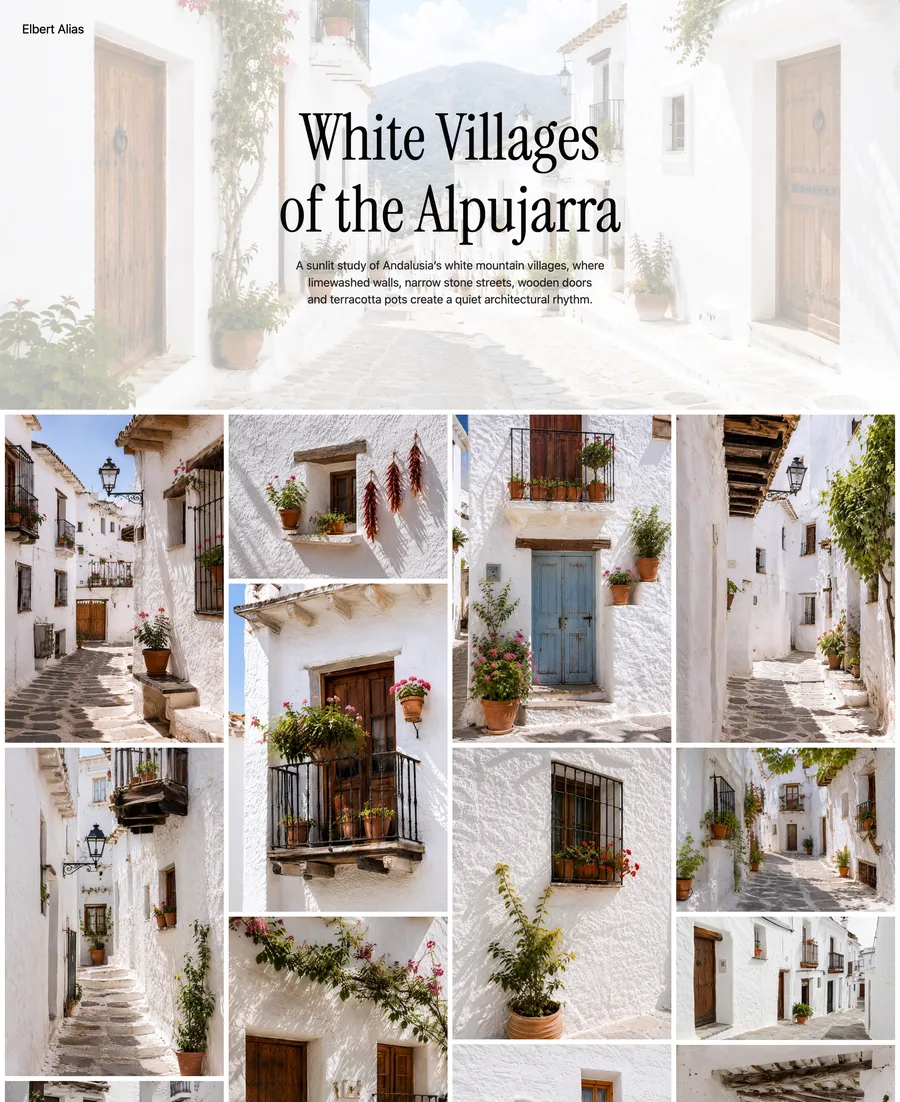
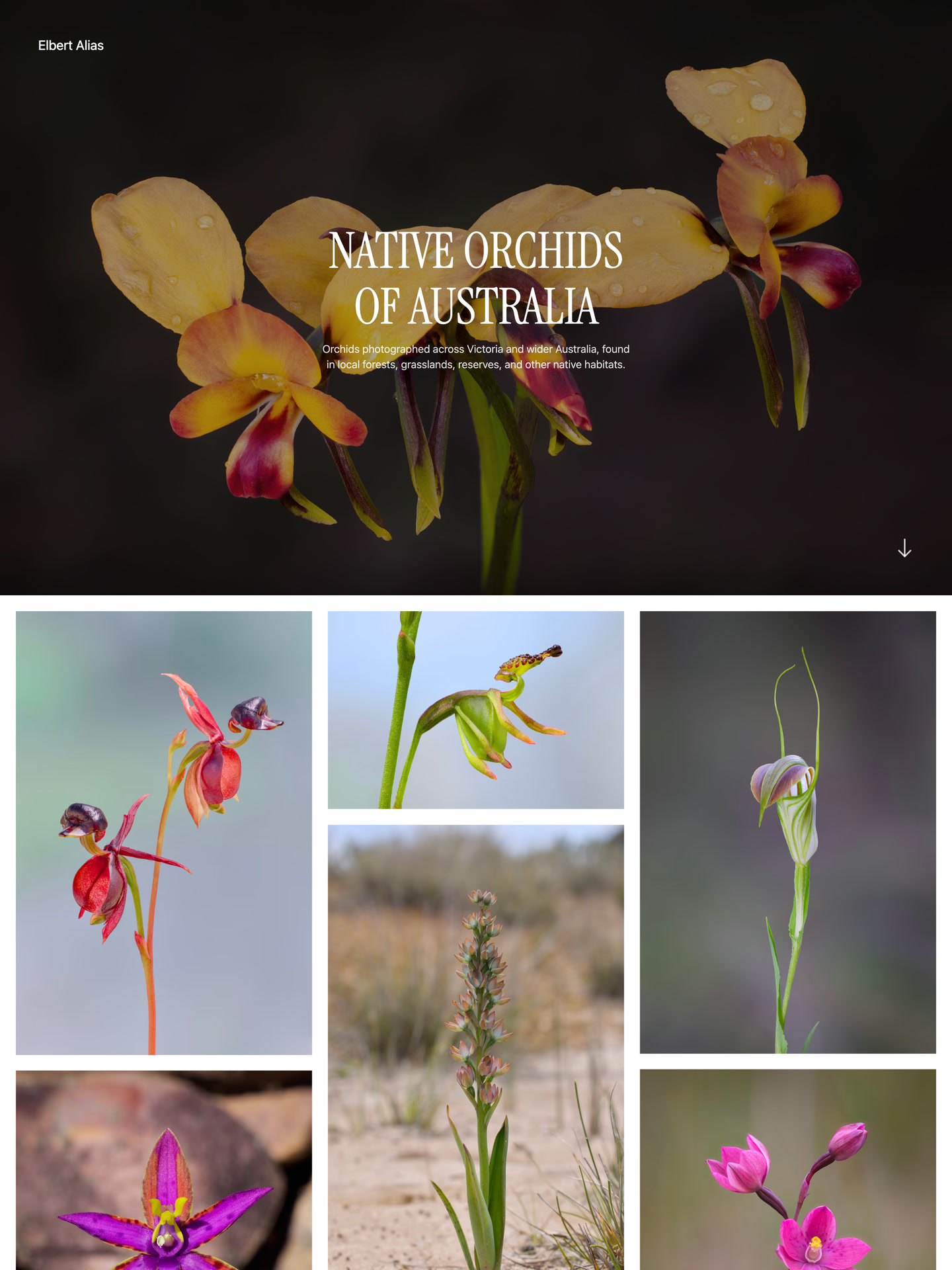
Separate galleries by subject or habitat when viewers are likely to seek a particular body of work: birds, orchids, coast, insects, alpine landscapes, or field studies.
Within an orchid gallery, an environmental view can show where the flowers grow before close details reveal their differences. Species names or field notes become useful when they add something a visitor could not learn by looking alone.
If the story is about a habitat or a changing season, organize around that instead of species. Distinct covers help visitors choose the collection that interests them.
3. A documentary story
Here the sequence carries meaning. A useful edit usually combines scene-setting, people, action, evidence, transitions, and detail rather than ranking photographs from strongest to weakest.
Give someone their bearings in the first few frames, then bring them closer through people, actions, and details. A change in distance can do more to develop the story than another strong image of the same moment.
Use captions for the names, dates, and circumstances that matter. Let the ending follow the story’s emotional or factual destination rather than choosing a wide photograph simply because it looks like a conclusion.
4. Portraits
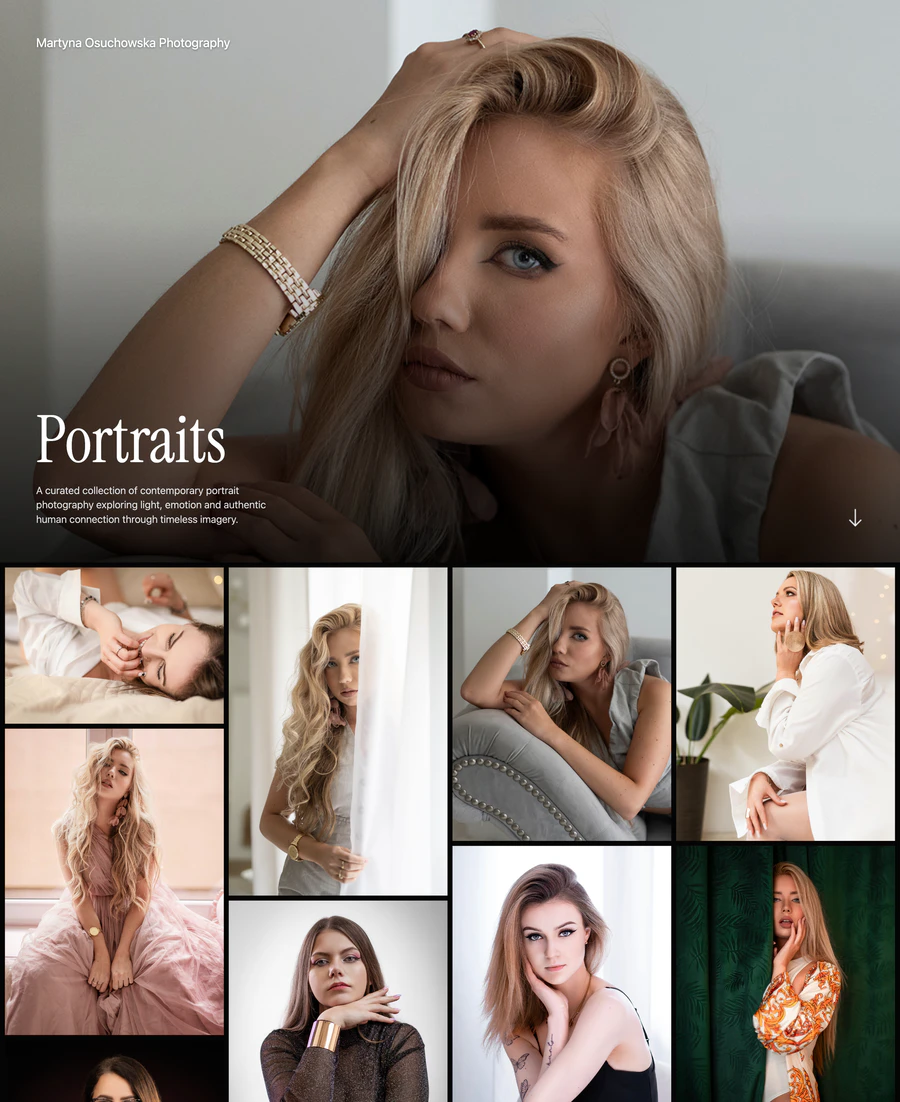
A portrait portfolio should show the kinds of encounters and visual decisions you want associated with your work. Organize by editorial, environmental, studio, family, or personal series only when those groups feel meaningfully different.
A face can hold attention, but a gesture or a glimpse of the room can reveal more about the encounter. Look for that variation instead of filling a gallery with the same expression and framing.
Personal and commissioned portraits can sit together when they share an approach. Separate them when an editor or potential client needs to see a particular kind of work, and include names or assignment details with the appropriate permission.
5. Wedding and event highlights
A public highlights portfolio is not the same as a client-delivery gallery. It demonstrates coverage and point of view without reproducing every part of an assignment.
Show how you move through an event: the space before people arrive, a relationship, a burst of activity, and a quiet moment afterward. A few complete stories can say more about your coverage than an endless selection of highlights.
Keep private selections and full delivery galleries separate. Choose public photographs with the people involved and the intended audience in mind.
6. Commercial work
Organize around the assignment a commissioner needs to evaluate: interiors, food, products, hospitality, architecture, people, or campaigns. The labels should help a viewer reach relevant work without decoding your internal categories.
An interiors gallery should quickly show how you handle space and light across more than one room or assignment. A food gallery should give the same confidence in your treatment of a different subject.
Campaign context can help someone imagine the photographs in use, while a related personal project can reveal what you bring to an assignment. Keep both in service of the images a commissioner came to see.
7. A mix of personal work
A photographer can care about several subjects without producing a confusing portfolio. The solution is clear gallery boundaries and an opening selection that shows the common eye rather than every category.
Galleries such as Night Walks, Family Archive, and Coast give each interest room. A short description can explain the connection when the title alone does not. The covers can reveal shared attention to light, color, or gesture across very different subjects.
Let the strongest one or two projects lead. You do not need to keep a weaker category visible just to prove that you have photographed it.
What to look for in an example
Spend one minute on the homepage, then one minute in a gallery. Write down what you believe the photographer cares about and which image you remember. If the answer comes mostly from biography copy, menus, or visual effects rather than photographs, the edit may not be doing enough.
Try opening a gallery from its cover and title alone. Notice whether the sequence changes distance and pace, whether the text helps you understand the images, and how easily you can find the photographer’s contact details.
Borrow the decision that works for your photographs, such as a clear cover or an unhurried sequence. The useful lesson is how the structure serves the work.
Give your photographs a gallery of their own.
Choose a cover, arrange the sequence, and publish your first ISO100 gallery. Add more series as your portfolio grows.
Common questions
What makes a photography portfolio example worth studying?
Study examples that reveal a clear editorial decision: a coherent selection, honest gallery covers, meaningful grouping, deliberate sequence, restrained context, and an obvious path through the work.
Should a photography portfolio show one style?
It should show a legible point of view, which is not the same as making every photograph look alike. Variation can strengthen a portfolio when gallery boundaries and sequencing explain how the work relates.
Can a portfolio contain both personal and commissioned photography?
Yes. Keep them together when the visual approach and intended audience overlap. Use separate galleries when viewers need to evaluate a specific assignment type or when the work tells substantially different stories.
Choose the next topic.
Making your first portfolio
Work from a clear brief through image selection, galleries, and publication.
Sequencing a portfolio
Shape an opening, vary the pace, and finish with purpose.
Choosing your photographs
Build a shortlist, remove weaker frames, and ask for useful feedback.